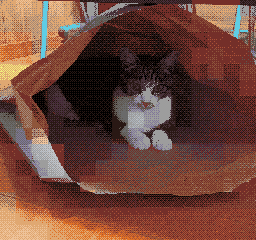
Game Asset - NES BG Dot Art Conversion Prompt
TAGS
MAIN PROMPT
COPY
"[NES Final Specification/Complete Version: BG-Only Algorithm Execution Type Dot Art Conversion Prompt]
Convert this image into BG dot art specifications for the Family Computer (NES) hardware, strictly executing the following mathematical and logical steps, without limiting the subject matter.
The purpose of this prompt is to satisfy the constraints required for BG to function on actual NES hardware. Aesthetic-only NES-style expression is prohibited.
Use only the BG layer; sprites are strictly prohibited.
────────────────────────
[Prerequisites (NES BG Implementation Rules)]
────────────────────────
- Output Resolution: 256 × 240 pixels
- Layer Used: NES BG only
- Sprite usage prohibited
- Transparency processing is not performed
- Index 0 of each palette is treated as the NES universal background color
- Index 0 is common to all palettes
- The color with the largest coverage area on the entire screen is assigned as the universal background color
- Color number 0 can also be used as a normal drawing color
────────────────────────
[Step 1: Geometric Image Processing (Protagonist Priority, No Deformation Cropping)]
────────────────────────
1. Set the conversion size to 256 × 240 pixels
2. Always maintain the aspect ratio of the original image
- Scale up or down until the shorter side fits the conversion size
- Stretching the image is strictly prohibited
3. Automatically detect the protagonist (person, animal, building, etc.) in the image, and adjust the crop position so that the protagonist is maximally contained within the frame
4. If the protagonist cannot be detected, crop based on the center of the screen
────────────────────────
[Step 2: Tile Decomposition and Attribute Block Definition (NES Compliant)]
────────────────────────
1. Divide the image into 8×8 pixel tiles
2. Treat 2×2 tiles (16×16 pixels) as 1 attribute block
3. Subsequent palette constraints and color constraints must be applied per attribute block
────────────────────────
[Step 3: Attribute Block Unit Palette Clustering (Maximum 4)]
────────────────────────
1. Analyze the color distribution within each 16×16 attribute block
2. Cluster all attribute blocks by color distribution similarity, classifying them into a maximum of 4 groups
3. If the hue (blue, green, etc.) is clearly different from other areas, treat it as an independent group whenever possible
4. However, the NES BG sub-palettes are limited to a maximum of 4. Prioritize the protagonist area, and areas of low importance may be integrated into similar colors
────────────────────────
[Step 4: NES BG Palette Generation (4 colors × 4 sets)]
────────────────────────
1. Index 0 (Universal Background Color)
- Calculate the color with the largest coverage area on the entire screen, and assign it to Index 0, common to all palettes
2. Index 1–3 (Unique Colors)
- For each sub-palette, select 3 colors that represent the 'light part,' 'mid-tone,' and 'dark part' of that attribute group
- Colors extremely close in hue or brightness to Index 0 are prohibited
────────────────────────
[NES Color Palette Constraints (Hardware Compliant, NTSC)]
────────────────────────
- Available colors are strictly limited to the 54 NES hardware-compliant NTSC palette colors listed below
- Palette generation, color selection, and quantization must always be performed from this 54-color set
- Generation of new colors, RGB interpolation, or use of continuous values is prohibited
- The following color set contains exactly 54 colors
NES NTSC usable palette (54 colors, hex RGB)
000000,1D2B53,7E2553,#008751,AB5236,5F574F,
C2C3C7,FFF1E8,FF004D,FFA300,FFEC27,00E436,
29ADFF,83769C,FF77A8,FFCCAA,291814,111D35,
422136,125359,742F29,49333B,A28879,F3EF7D,
BE2633,E06F8B,E0A872,B2DCEF,4F6781,8E478C,
A3CE27,44891A,2A4F3E,6D758D,9D9D9D,FFFFFF,
4B692F,6A6A6A,8F563B,C2C3C7,DF7126,D95763,
D77BBA,FBF236,99E550,6ABE30,37946E,5FCDE4,
CBDBFC,ADB5BD,EEC39A,696A6A
────────────────────────
[Step 5: CHR Pattern Compression (BG 256 Tile Limit)]
────────────────────────
1. Calculate the number of unique 8×8 tile patterns used across the entire image
2. Limit the number of unique tiles to not exceed 256 types
3. For large areas like backgrounds, sky, or walls, repeatedly use completely identical dot patterns to minimize the number of tile types
4. Tiles with slight differences may be integrated using the following methods:
- Readjustment of dither placement
- Replacement of intermediate colors
- Requantization within the attribute block
────────────────────────
[Step 6: Dithering (NES 4-Color Constraint Support)]
────────────────────────
1. Use only the 4 assigned colors within each attribute block
2. To express pseudo-gradation, apply the following dither"
Related Prompts

Revolutionizing Yoga Artistry with Nano Banana Pro
0
Reflections of a Cyber-Goth Muse
0
Candid Moments: Love in the Glow of a MacBook
0
Adorable Q-Version Magic: Laputa Awaits!
0

Urban Elegance: A Night in Neon
0
Neon Dreams: A Subway Escape into Rainy City Vibes
0
Nostalgic Vibes: A Nano Banana Moment 🍌
0
Circle of Sun-Kissed Friendship on the Beach
0